Austria
Updated June 20, 2026
Austria's winter 2025/26 season alone recorded 74.23 million overnight stays, a fitting statistic for a small Alpine country that punches dramatically above its size in global tourism. The former heart of the Habsburg Empire holds 12 UNESCO World Heritage Sites, including Vienna's imperial palaces a…
Must-See Places in Austria

Vienna
Vienna concentrates imperial Habsburg grandeur at Schönbrunn and Hofburg palaces alongside a still-thriving classical music scene and UNESCO-recognized coffeehouse culture dating back centuries. The city hosts the 70th Eurovision Song Contest in May 2026. Ideal for music lovers, history buffs, and travelers seeking imperial architecture paired with an exceptionally high quality of urban life.

Salzburg
Salzburg's Baroque old town, a UNESCO World Heritage Site, anchors Mozart's birthplace and hosts the renowned Salzburg Festival each summer, drawing classical music and theater enthusiasts worldwide. The surrounding Alpine foothills and 'Sound of Music' filming locations add further draw. Best for classical music lovers and travelers wanting a smaller, walkable historic city framed by mountains.

Hallstatt
Hallstatt's lakeside Alpine village, with salt mines worked continuously for roughly 7,000 years, ranks among Austria's most photographed destinations, its pastel houses reflected in the still waters of the Hallstättersee. The surrounding Salzkammergut region offers extensive hiking and lake-district scenery beyond the village itself. Ideal for photographers and nature lovers, though the village's small size strains under peak-season crowds.

Innsbruck and the Tyrolean Alps
Innsbruck, twice host of the Winter Olympics, sits dramatically surrounded by the Tyrolean Alps, offering easy access to world-class skiing in winter and hiking in summer alongside a well-preserved medieval old town. The Nordkette cable car climbs directly from the city center into high Alpine terrain within minutes. Best for skiers, hikers, and adventure travelers seeking immediate mountain access from an urban base.

The Wachau Valley
The Wachau Valley, a UNESCO World Heritage Site along the Danube, combines terraced vineyards, medieval castle ruins, and charming wine villages like Dürnstein, where Richard the Lionheart was once famously imprisoned. The region's Heuriger wine taverns offer some of Austria's most atmospheric autumn harvest celebrations. Ideal for wine lovers and cyclists exploring the scenic Danube cycle path.

Graz
Graz, Austria's second-largest city, preserves a UNESCO-listed historic center blending Italian Renaissance and Habsburg architectural influences, alongside a notably youthful, university-driven energy distinct from Vienna's more formal imperial atmosphere. The city's striking modern Kunsthaus art museum contrasts deliberately with its surrounding historic architecture. Best for travelers wanting a smaller, less touristy alternative to Vienna and Salzburg.
Unique Experiences in Austria
Attending a Performance at the Vienna State Opera
Watch a world-class opera or ballet performance at the Vienna State Opera, one of the most prestigious opera houses globally, where standing-room tickets offer a surprisingly affordable way to experience this storied institution.
Exploring Hallstatt's Ancient Salt Mines
Descend into the Hallstatt salt mines, worked continuously for roughly 7,000 years, sliding down a wooden miners' slide and viewing preserved prehistoric artifacts within the mountain's depths.
Skiing in the Tyrolean Alps
Ski some of Europe's most reliable and well-groomed Alpine terrain around Innsbruck or St. Anton, regions that helped establish Austria's reputation as a premier winter sports destination over a century of skiing tradition.
Heuriger Wine Tavern Evening in the Wachau Valley
Spend an evening at a traditional Heuriger wine tavern in Lower Austria's wine country, sampling the current year's young wine alongside simple, hearty buffet-style Austrian dishes in a centuries-old rural setting.
Cycling the Danube Path Through the Wachau Valley
Pedal along the well-maintained Danube cycle path through the UNESCO-listed Wachau Valley, passing terraced vineyards, medieval castle ruins, and riverside villages at an unhurried pace.
Vienna Coffeehouse Hopping
Spend an afternoon moving between Vienna's historic coffeehouses, each with its own century-old character, ordering a melange or einspänner and lingering for hours over a single cup, exactly as the UNESCO-recognized tradition intends.
Travel Tips for Austria
Validate Public Transport Tickets Before Boarding in Vienna
Vienna's U-Bahn, trams, and buses operate on an honor system without ticket barriers, but tickets must be validated at s…
Book Salzburg Festival Accommodation Months in Advance
The Salzburg Festival, running mid-July through August, causes hotel prices to spike 30–50% above already-high summer ra…
Understand Austria's Tipping Norms
Tipping in Austria is customary but modest — rounding up the bill or adding roughly 5–10% in restaurants is standard, co…
Carry a Mix of Cash and Card
While Vienna and Salzburg are largely card-friendly, smaller Alpine villages, traditional Heuriger wine taverns, and som…
Check ETIAS Requirements Before Late 2026 Travel
Travelers from the UK, US, Canada, Australia, and New Zealand will need an approved ETIAS travel authorization, costing …
Respect Quiet Hours and Sunday Closing Norms
Austria observes fairly strict 'Ruhezeit' (quiet hours) in residential areas, typically from 10 p.m. to 6 a.m., and most…
Must-Try Local Dishes

Wiener Schnitzel
Wiener Schnitzel, Austria's most iconic dish, pounds a veal cutlet thin before breading and frying it until golden and delicately crisp, traditionally served with a simple wedge of lemon and a side of parsley potatoes or potato salad. The dish carries protected legal status when made specifically with veal, with pork versions required to be labeled differently to avoid misleading diners. Viennese tradition holds that the schnitzel should be so thin and crisp it can be 'folded like a newspaper,' a benchmark serious Austrian cooks still hold themselves to.

Sachertorte
Sachertorte layers a dense, not-too-sweet chocolate sponge cake with a thin layer of apricot jam beneath a glossy dark chocolate glaze, traditionally served with a dollop of unsweetened whipped cream to balance its rich intensity. Created in 1832 by Franz Sacher, a 16-year-old apprentice chef, for Prince Wenzel von Metternich, the cake's exact original recipe remains a closely guarded trade secret of Vienna's Hotel Sacher to this day. A decades-long legal dispute over the 'original' recipe between Hotel Sacher and rival bakery Demel became one of Austria's most famous culinary controversies.
Tafelspitz
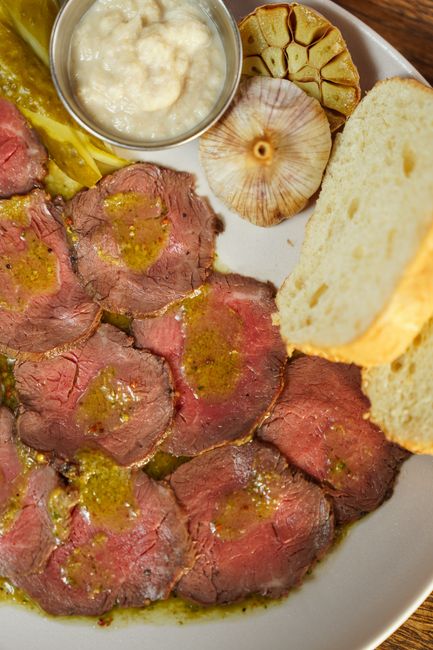
Tafelspitz, reportedly Emperor Franz Joseph I's favorite dish, slowly boils a prime cut of beef in a vegetable-rich broth until tender, served sliced alongside the broth as soup, horseradish, and apple-horseradish sauce, plus fried roasted potatoes. The dish exemplifies Viennese imperial cuisine's emphasis on careful technique applied to humble, affordable cuts of meat rather than luxury ingredients. Café Sacher and other historic Viennese restaurants still serve it largely unchanged from its 19th-century imperial form.

Kaiserschmarrn
Kaiserschmarrn shreds a fluffy, caramelized pancake into irregular pieces, dusted generously with powdered sugar and served warm with stewed plums or berry compote, a dessert reportedly created for Emperor Franz Joseph I himself, with the name translating roughly to 'Emperor's mess.' The dish's deliberately torn, imperfect presentation contrasts with typically formal Viennese imperial dining customs, adding to its charm. It remains a beloved Alpine ski-lodge dessert across Austria, particularly popular after a day on the slopes.

Käsekrainer
Käsekrainer is a popular Viennese sausage studded throughout with melted cheese pockets, grilled or fried until the casing crisps and the cheese turns molten inside, traditionally sold from the city's historic Würstelstand sausage stands, a UNESCO-recognized cultural tradition dating to the 18th century. These late-night sausage stands remain a Viennese institution, particularly popular after theater performances or nights out, serving a working-class culinary tradition that has persisted unchanged for centuries.

Apfelstrudel
Apfelstrudel wraps thinly sliced apples, raisins, cinnamon, and sugar inside impossibly thin, hand-stretched pastry dough, rolled into a log and baked until golden, then dusted with powdered sugar and often served with vanilla sauce or whipped cream. The technique of stretching strudel dough until it's nearly transparent, traditionally thin enough to read a newspaper through, remains a benchmark skill taught in Austrian culinary training. The dish reflects the broader Habsburg-era culinary exchange with Hungarian and Balkan pastry traditions.
History
Roman Frontier and Early Medieval Austria
Roman legions established the province of Noricum in the territory of modern Austria around 15 BC, building fortified settlements along the Danube frontier that would later evolve into cities including Vienna (Roman Vindobona) and Salzburg (Roman Juvavum). The region's strategic position guarding Rome's northern border shaped its early urban development.
The Babenberg Dynasty
Following centuries of Germanic and Slavic migration after Rome's fall, the Babenberg dynasty established control over the eastern March (Ostarrîchi, the linguistic root of 'Austria') starting in 976 AD, gradually building the territorial foundation of the future Austrian state.
- The name 'Austria' derives from the Old High German 'Ostarrîchi,' meaning 'eastern realm,' first recorded in a document from 996 AD.
- Vienna's strategic Danube River position made it a key trading and military crossroads between Western and Eastern Europe throughout the medieval period.
- Austrian wine-making traditions trace back to at least 700 BC, predating even Roman settlement, established by earlier Celtic inhabitants.
- The Babenberg line ended in 1246, creating a succession crisis that the rising Habsburg family would eventually resolve in their own favor.
This early medieval foundation set the stage for the Habsburg dynasty's rise, which would transform a regional duchy into one of Europe's most powerful royal houses.
Climate & Best Time to Visit
Spring
5–17°C
Spring (April to May) brings mild, increasingly warm weather of 8–18°C to Vienna and the lowlands, while Alpine regions …
Summer
15–25°C
Summer (June to August) brings warm, occasionally hot weather of 16–28°C to lowland cities like Vienna, while the Alps s…
Autumn
6–16°C
Autumn (September to October) offers comfortable temperatures of 8–18°C, golden Alpine foliage, and Lower Austria's wine…
Winter
-3–4°C
Winter (November to March) brings Austria's defining ski season, with the western Alpine regions seeing the heaviest, mo…
Fascinating Fun Facts
Vienna's Coffeehouse Culture Is Protected by UNESCO
UNESCO inscribed Viennese coffeehouse culture onto its Intangible Cultural Heritage list in 2011, recognizing a centurie…
Austria's Habsburg Dynasty Expanded Mostly Through Marriage
The Habsburg family famously expanded their territorial control across Europe largely through strategic royal marriages …
Mozart Was Born in Salzburg but Found Fame in Vienna
Wolfgang Amadeus Mozart was born in Salzburg in 1756 but moved to Vienna in his twenties seeking greater artistic opport…
Austria Has Been Permanently Neutral Since 1955
Austria's 1955 State Treaty, which restored full sovereignty after a decade of postwar Allied occupation, required the c…
Hallstatt's Salt Mines Have Been Worked for Over 7,000 Years
The salt mines near the picturesque village of Hallstatt have been continuously worked since at least the Neolithic peri…
Vienna Has Topped Global Quality-of-Life Rankings for Years
Vienna has repeatedly ranked among the world's most livable cities in various global quality-of-life surveys, credited t…
Traveler Reviews (0 reviews)
Sign in to leave a review and share your experience.
Sign InNo reviews yet. Be the first to share your experience!