Germany
Updated June 20, 2026
Germany welcomed 37.4 million international visitors in 2024, ranking among the world's top ten most-visited countries, anchored by 53 UNESCO World Heritage Sites — among the highest counts globally. Berlin alone draws over 12 million arrivals annually, while fairy-tale Neuschwanstein Castle in Bava…
Must-See Places in Germany
Berlin
Berlin layers Cold War history at the Berlin Wall Memorial and Checkpoint Charlie with a thriving contemporary art and nightlife scene, drawing over 12 million visitors annually. The Museum Island complex, a UNESCO World Heritage Site, houses five major museums within walking distance of each other. Ideal for history buffs, art lovers, and travelers wanting Europe's most layered 20th-century history in one city.
Munich and Bavaria
Munich anchors Bavaria's beer garden culture and serves as gateway to the Alps and Neuschwanstein Castle, which alone draws 1.4 million visitors a year. Oktoberfest, running mostly through September, brings roughly 6 million visitors to the city for the world's largest beer festival. Best for festival-goers, castle enthusiasts, and travelers wanting classic Bavarian culture and Alpine scenery combined.
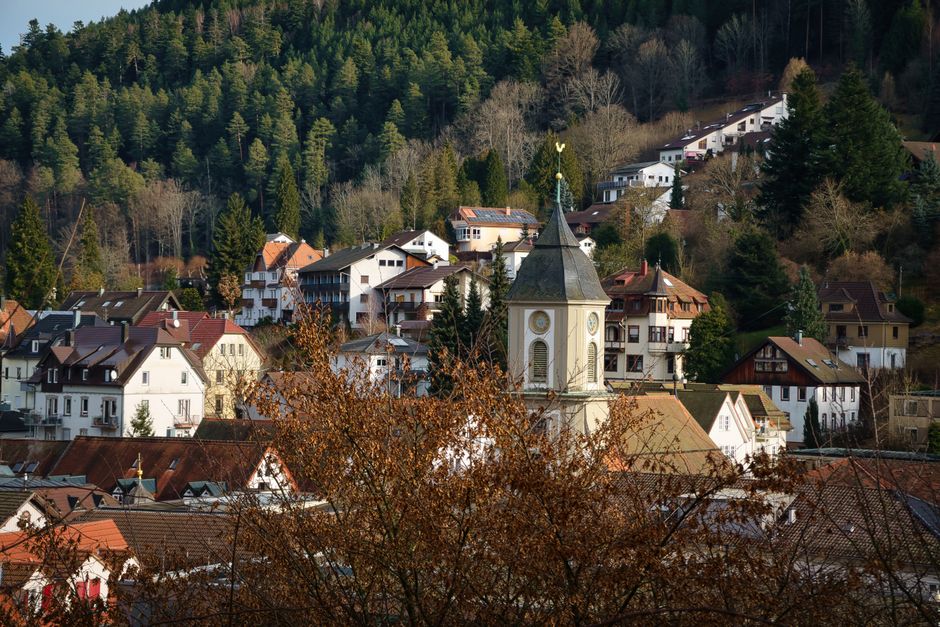
The Black Forest
The Black Forest's dense pine woodlands, half-timbered villages, and cuckoo clock tradition log over 20 million overnight stays annually, making it one of Germany's most popular regional getaways. The region also gives its name to Black Forest Cake, with its signature cherry-and-Kirschwasser flavor profile. Ideal for hikers, families, and travelers seeking fairy-tale forest scenery away from major cities.
Rhine Valley and Moselle Wine Region
The Rhine Valley's hillside vineyards and medieval castles perched above the river create one of Europe's most scenic river journeys, particularly the UNESCO-listed Middle Rhine stretch between Koblenz and Bingen. The neighboring Moselle Valley offers similarly dramatic vineyard terraces along a winding river. Best for wine lovers, river cruise travelers, and those wanting castle-spotting without the crowds of Bavaria.
Dresden
Dresden's Baroque old town, painstakingly rebuilt after near-total destruction in WWII firebombing, includes the Frauenkirche church, reconstructed using original charred stones recovered from the rubble decades after the war. The city's Zwinger palace complex houses world-class art and porcelain collections. Ideal for history buffs and architecture lovers interested in postwar reconstruction and Baroque grandeur.
Hamburg
Hamburg, Germany's second-largest city and a historic Hanseatic League trading port, combines the modern Elbphilharmonie concert hall with the UNESCO-listed Speicherstadt warehouse district, the largest warehouse complex in the world built on timber piles. The city's canals have earned it comparisons to Venice and Amsterdam. Best for architecture enthusiasts, music lovers, and travelers wanting Germany's maritime trading history.
Unique Experiences in Germany
Touring Neuschwanstein Castle and the Bavarian Alps
Tour the fairy-tale castle that directly inspired Disney's Sleeping Beauty Castle, built by Bavaria's eccentric King Ludwig II and left unfinished at his mysterious death in 1886, set against a dramatic Alpine backdrop.
Experiencing Oktoberfest in Munich
Join roughly 6 million fellow visitors in Munich's massive beer tents for the world's largest beer festival, a tradition dating to a royal wedding celebration in 1810, complete with traditional Bavarian dress, brass bands, and one-liter beer mugs.
Cycling the Middle Rhine Valley Wine Route
Pedal along the Rhine River past terraced vineyards and a near-continuous procession of medieval castles between Koblenz and Bingen, a UNESCO World Heritage stretch considered one of Europe's most scenic cycling routes.
Christmas Market Hopping in Nuremberg and Dresden
Wander among wooden stalls selling mulled wine (Glühwein), roasted chestnuts, and handcrafted ornaments at two of Germany's oldest and most atmospheric Christmas markets, both dating back centuries.
Hiking the Black Forest's Höllental Gorge
Walk through the dramatic Höllental ('Hell's Valley') gorge in the Black Forest, a steep, forested ravine that has inspired centuries of local folklore and offers some of the region's most striking hiking scenery.
A Berlin Wall History Walking Tour
Walk the former path of the Berlin Wall with a guide who lived through the division, visiting preserved sections, Checkpoint Charlie, and the East Side Gallery's painted remnants, for firsthand context impossible to get from a museum alone.
Travel Tips for Germany
Buy a Deutschland-Ticket for Cheap Regional Travel
The Deutschland-Ticket, a flat-rate monthly pass costing €63 since January 2026, covers unlimited travel on regional tra…
Carry Cash — Germany Remains More Cash-Reliant Than Expected
Despite its reputation for engineering precision, Germany lags behind much of Western Europe in card payment adoption, w…
Respect Sunday Closing Laws (Ladenschlussgesetz)
Most German shops, including supermarkets, close entirely on Sundays under longstanding closing-hour laws, with exceptio…
Book Neuschwanstein and Oktoberfest Logistics Well Ahead
Neuschwanstein Castle tickets frequently sell out days in advance during summer, and Oktoberfest beer tent table reserva…
Learn Germany's Strict Jaywalking and Recycling Norms
Germans take pedestrian crossing rules seriously — crossing against a red signal, even with no traffic present, can draw…
Watch for Regional Dialect and Cultural Differences
Bavarian, Saxon, and Rhineland regional identities remain strong, with distinct dialects, culinary traditions, and even …
Must-Try Local Dishes

Bratwurst
Bratwurst represents Germany's vast sausage tradition, with over 1,500 regional varieties across the country, from Nuremberg's small, finger-sized Rostbratwurst grilled over beechwood to Thuringia's longer, coarser-textured version. Each region guards its specific recipe and grilling method, often with protected geographical status under German and EU law. Served simply with mustard and a bread roll, or alongside sauerkraut and potatoes, bratwurst remains the country's most ubiquitous street food.

Sauerbraten
Sauerbraten is Germany's classic pot roast, beef marinated for several days in vinegar, wine, and spices before slow braising until tender, the long marination process originally developed as a meat preservation technique before refrigeration existed. The resulting tangy, deeply savory gravy is traditionally thickened with crushed gingerbread or raisins, depending on the region, and served with red cabbage and potato dumplings (Knödel). Rhineland versions are particularly famous, often considered the dish's most refined regional expression.
Pretzel (Brezel)
The German pretzel, with its distinctive twisted knot shape and dark, glossy crust achieved by dipping the dough in a lye solution before baking, traces its origins to medieval monastery bakers, though the exact invention story remains disputed between several Bavarian and Swabian towns. Bavarian pretzels are traditionally served warm with butter or alongside a cold beer at beer gardens and Oktoberfest. The lye bath, while sounding alarming, is what gives the pretzel its signature deep brown color and chewy exterior.
Schnitzel
Schnitzel — a thin cutlet of pork or veal, breaded and fried until golden and crisp — became a staple of German and Austrian home cooking and restaurant menus alike, often served alongside potato salad or fries with a wedge of lemon. While the Wiener Schnitzel (Austrian veal version) carries strict protected naming rules, German Schnitzel commonly uses pork and appears with regional variations, including a mushroom cream sauce version called Jägerschnitzel. It remains one of the most ordered dishes in German restaurants nationwide.
Black Forest Cake (Schwarzwälder Kirschtorte)
Black Forest Cake layers chocolate sponge with whipped cream and tart cherries soaked in Kirschwasser (cherry brandy), a dessert that takes its name and signature flavor directly from the Black Forest region's wild cherry orchards and cherry-distilling tradition. The cake's modern form was standardized in the early 20th century, though cherry-and-cream combinations in the region likely predate that formalization by generations. A proper version uses real Kirschwasser rather than artificial cherry flavoring, a distinction serious German bakers take seriously.
Currywurst
Currywurst, invented in postwar Berlin in 1949 when street vendor Herta Heuwer mixed ketchup with curry powder she'd received from British soldiers, tops a sliced sausage in a tangy curry-spiced tomato sauce, served with fries or a bread roll. The dish became an instant working-class favorite in divided Berlin and remains one of Germany's most beloved fast food staples, with Berlin alone home to a small museum dedicated entirely to its history. Street stalls (Currywurst-Buden) selling the dish remain a fixture of German urban life.
History
Germanic Tribes and the Holy Roman Empire
Long before a unified Germany existed, Germanic tribes successfully resisted Roman conquest at the decisive Battle of the Teutoburg Forest in 9 AD, destroying three Roman legions and permanently halting Rome's eastward expansion beyond the Rhine. This early resistance shaped centuries of regional, rather than centralized, political development.
The Holy Roman Empire
Charlemagne's Frankish empire, crowned by the Pope in 800 AD, eventually gave rise to the Holy Roman Empire, a loose confederation of hundreds of German-speaking principalities, free cities, and bishoprics that persisted for nearly a thousand years until Napoleon dissolved it in 1806.
- Cologne Cathedral, begun in 1248, took 632 years to complete, finally finishing in 1880 after centuries of interrupted construction.
- Johannes Gutenberg's invention of the movable-type printing press around 1440 in Mainz revolutionized the spread of information across Europe.
- The Hanseatic League, a powerful medieval trading confederation of northern German cities including Hamburg and Lübeck, dominated Baltic and North Sea trade for centuries.
- Martin Luther's 1517 posting of his Ninety-Five Theses in Wittenberg ignited the Protestant Reformation, permanently splitting European Christianity.
This fragmented political structure, combined with deep religious division following the Reformation, set the stage for centuries of conflict before any unified German nation would emerge.
Climate & Best Time to Visit
Spring
5–17°C
Spring (April to May) brings gradually warming temperatures of 8–18°C, blooming gardens, and the start of outdoor café s…
Summer
15–26°C
Summer (June to August) brings Germany's warmest weather, typically 16–28°C with occasional heatwaves pushing above 30°C…
Autumn
7–17°C
Autumn (September to October) brings Oktoberfest itself, running roughly mid-September to early October in Munich, along…
Winter
-3–5°C
Winter (November to February) brings cold conditions of -5 to 5°C, with Bavaria's Alpine regions seeing the most reliabl…
Fascinating Fun Facts
Germany Has Over 3,200 Officially Registered Bread Varieties
The German Institute for Bread maintains an official register listing more than 3,200 distinct bread types, a culinary d…
Cologne Cathedral Took 632 Years to Complete
Construction on Cologne Cathedral began in 1248 but stalled for centuries due to funding and political issues, leaving t…
The Berlin Wall Divided a City for 28 Years
The Berlin Wall, erected overnight on August 13, 1961, eventually stretched 155 km around West Berlin, complete with gua…
Neuschwanstein Castle Inspired a Disney Icon — and Was Never Finished
Bavaria's Neuschwanstein Castle, commissioned by the reclusive King Ludwig II in 1869, directly inspired the design of D…
Oktoberfest Mostly Happens in September
Despite its name, Munich's Oktoberfest runs primarily through September, typically starting mid-month and concluding in …
Germany Banned Naming Children Certain Things by Law
German civil registration offices (Standesamt) can legally reject a proposed baby name if it doesn't clearly indicate th…
Traveler Reviews (0 reviews)
Sign in to leave a review and share your experience.
Sign InNo reviews yet. Be the first to share your experience!