China
Updated June 20, 2026
China welcomed over 68 million international visitors in 2025, a 15.5% jump that helped it overtake the United States in total travel and tourism economic output for 2026. Home to 60 UNESCO World Heritage Sites — second only to Italy worldwide — China spans a continent's worth of landscapes, from Be…
Must-See Places in China

Beijing
Beijing concentrates the Forbidden City, the world's largest ancient palace complex with over 980 buildings, alongside the nearby Great Wall sections at Badaling and Mutianyu. The city hosted both the 2008 Summer and 2022 Winter Olympics, the first city to achieve that distinction. Ideal for history buffs, architecture lovers, and first-time visitors wanting imperial China's grandest sites in one base.
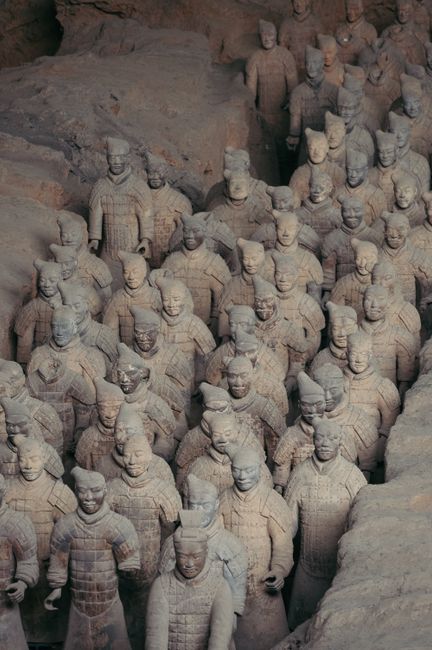
Xi'an and the Terracotta Army
Xi'an, China's ancient capital under 13 dynasties, is home to the Terracotta Army — over 8,000 life-sized clay soldiers discovered in 1974 guarding Emperor Qin Shi Huang's tomb. The city's intact Ming-era city walls and Muslim Quarter food street add layers of history spanning over two millennia. Best suited to history enthusiasts and food travelers exploring beyond China's coastal cities.

Guilin and the Li River
Guilin's karst limestone peaks rise dramatically from rice paddies and the winding Li River, a landscape so distinctive it has appeared on China's 20-yuan banknote. A scenic Li River cruise between Guilin and Yangshuo remains one of China's most photographed journeys. Ideal for nature lovers, photographers, and travelers seeking rural scenery away from major cities.

Shanghai
Shanghai's futuristic Pudong skyline rises directly across the river from the colonial-era Bund waterfront, encapsulating China's leap from 19th-century treaty port to 21st-century financial hub. The city's elevated maglev train, the world's first commercial line, reaches 430 km/h. Best for travelers interested in modern architecture, shopping, and China's fastest-paced urban energy.
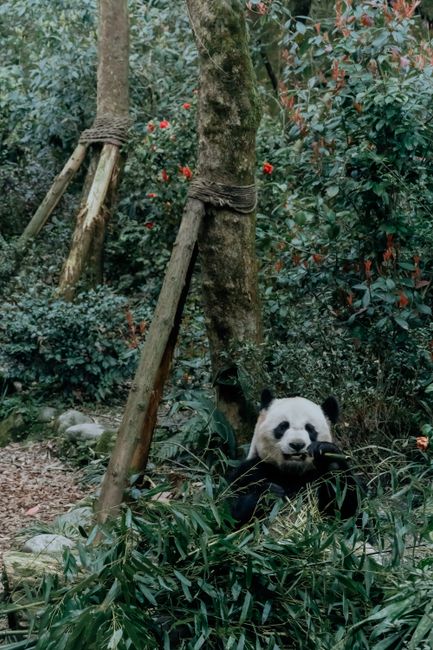
Chengdu
Chengdu, Asia's first UNESCO City of Gastronomy, pairs giant panda conservation centers with over 6,000 documented Sichuan dishes and a laid-back teahouse culture distinct from China's faster eastern cities. The Chengdu Research Base lets visitors observe pandas in near-natural enclosures. Ideal for food lovers, wildlife enthusiasts, and travelers wanting China's most relaxed major city.

Lhasa and the Tibetan Plateau
Lhasa, at 3,650 meters above sea level, centers on the Potala Palace, the former winter residence of the Dalai Lamas and a UNESCO World Heritage Site since 1994. The surrounding Tibetan Plateau offers some of the highest-altitude monasteries and landscapes on Earth. Best suited to adventurous travelers prepared for high-altitude acclimatization and seeking a markedly different cultural and spiritual experience within China.
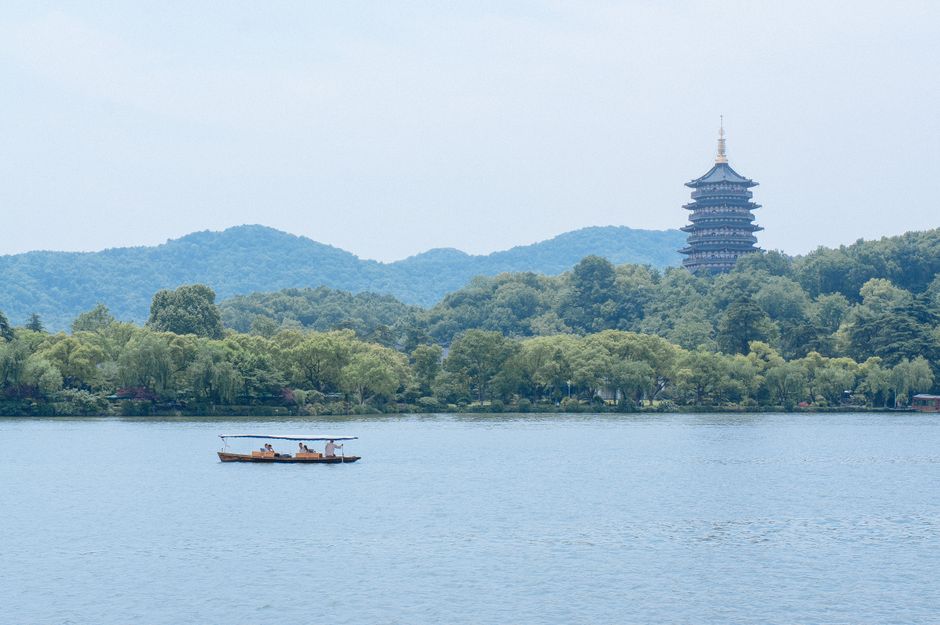
Hangzhou and West Lake
Hangzhou's West Lake, a UNESCO World Heritage Site since 2011, has inspired Chinese poets and painters for over a thousand years with its willow-lined causeways, pagodas, and seasonal lotus blooms. Marco Polo reportedly called it 'the most beautiful and magnificent city in the world' in the 13th century. Ideal for couples, garden lovers, and travelers seeking classical Chinese aesthetics within easy reach of Shanghai.
Unique Experiences in China
Hiking an Unrestored Section of the Great Wall
Trek the crumbling, ivy-covered Jiankou section of the Great Wall northwest of Beijing — a steep, unrestored stretch that offers a dramatically different, wilder experience than the crowded, rebuilt sections at Badaling.
Cruising the Li River Between Guilin and Yangshuo
Float past karst limestone peaks rising from rice paddies and bamboo groves on a slow Li River cruise, a landscape that has appeared on Chinese currency and inspired classical landscape painting for centuries.
Panda Keeper Experience in Chengdu
Spend a morning alongside professional keepers at the Chengdu Research Base, preparing food and observing giant pandas up close in an immersive conservation-focused experience.
Witnessing the Harbin Ice and Snow Festival
Walk through illuminated, full-scale ice castles and sculptures at Harbin's winter festival, one of the largest ice and snow art events in the world, set against temperatures that regularly drop below -20°C.
Tea Ceremony and Teahouse Culture in Chengdu
Settle into a traditional Sichuan teahouse for hours of tea-pouring theatrics, ear-cleaning services, and people-watching — a slow-paced ritual that locals treat as a genuine social institution rather than a tourist show.
High-Speed Rail Journey Across Multiple Cities
Cover Beijing to Shanghai's roughly 1,300 km in under 5 hours aboard China's high-speed rail network, the largest in the world, experiencing firsthand the infrastructure that has reshaped Chinese domestic travel since 2008.
Travel Tips for China
Download a VPN and Key Apps Before Arrival
Google, Facebook, Instagram, and WhatsApp are blocked in mainland China, and most Western banking apps and maps don't fu…
Check Visa-Free Eligibility Before Booking, Not After
China's 30-day visa-free policy covers 77 countries through December 2026, but eligibility, duration, and entry points v…
Book High-Speed Rail Tickets Through the Official 12306 App
China's high-speed rail network is extensive and efficient, but popular routes and holiday periods (especially Chinese N…
Carry Your Passport at All Times
Hotels, train stations, and even some tourist sites in China require passport checks for entry or booking, and police ca…
Adjust Expectations Around Crowds at Major Sites
Sites like the Great Wall at Badaling, the Forbidden City, and Xi'an's Terracotta Army can draw extremely dense crowds, …
Learn Basic Mandarin Phrases and Carry a Translation App
English is not widely spoken outside major hotels and tourist-facing businesses in Beijing and Shanghai, and even less s…
Must-Try Local Dishes

Peking Duck
Peking Duck is Beijing's signature dish, dating back to imperial kitchens of the Ming Dynasty, featuring a duck roasted until the skin turns lacquered, crackling mahogany-red while the meat stays succulent underneath. Skilled chefs carve it tableside into roughly 120 precise slices, served with thin pancakes, scallions, cucumber, and sweet bean sauce for diners to assemble themselves. Restaurants like Quanjude, founded in 1864, have served the dish to generations of Beijing residents and visiting heads of state alike.
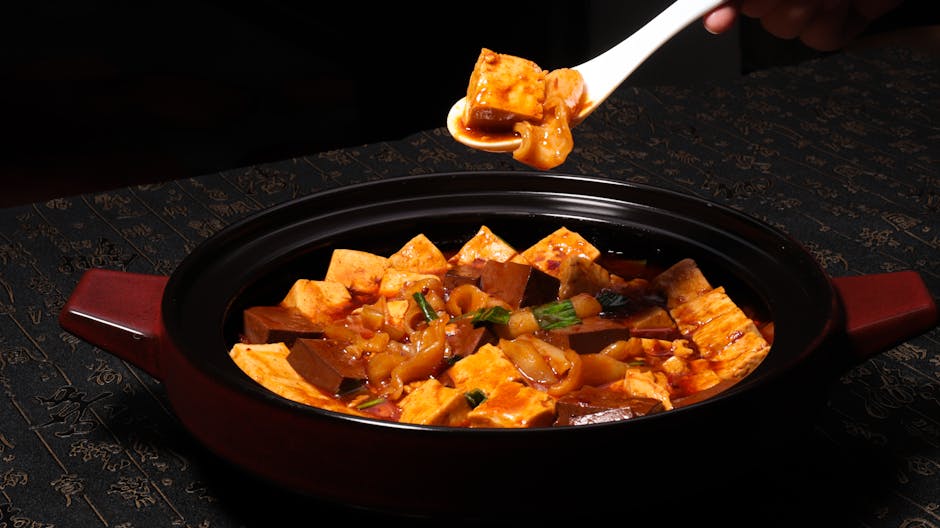
Mapo Tofu
Mapo tofu is a fiery Sichuan classic — soft tofu cubes simmered in a glossy, deep-red sauce of fermented chili bean paste, ground pork, and the numbing tingle of Sichuan peppercorn that defines the region's signature málà flavor. Legend traces the dish to a pockmarked ('mapo') innkeeper's wife in 19th-century Chengdu who created it from leftover ingredients for hungry laborers. The dish's balance of heat, numbness, and silky tofu texture has made it one of Sichuan cuisine's most internationally recognized exports.
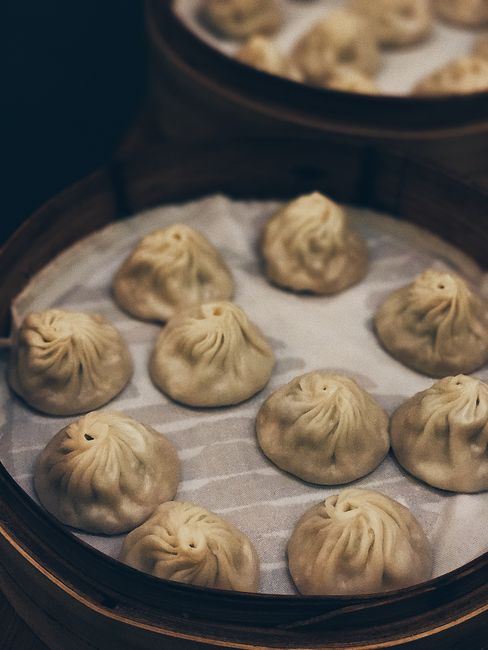
Xiaolongbao
Xiaolongbao are Shanghai-style soup dumplings, delicate pleated parcels of pork and gelatinized broth that bursts into hot soup the moment you bite through the thin dough wrapper. Steamed in bamboo baskets and best eaten with a spoon to catch the broth, they originated in Jiangsu province in the 19th century before becoming a Shanghai breakfast and brunch institution. Skilled chefs pleat each dumpling with 18 or more folds, a technique requiring years to master.

Hot Pot
Chinese hot pot turns dinner into a communal ritual: a simmering pot of broth, often split into spicy Sichuan-style and mild sides, sits at the table's center while diners cook thin-sliced meat, tofu, mushrooms, and vegetables themselves. Chongqing and Chengdu claim the dish's spiciest, numbing málà broths, while Beijing-style hot pot favors a clearer mutton-based broth. Originating among Mongolian nomads who cooked over portable fires, hot pot has evolved into one of China's most social dining formats, especially popular in winter.
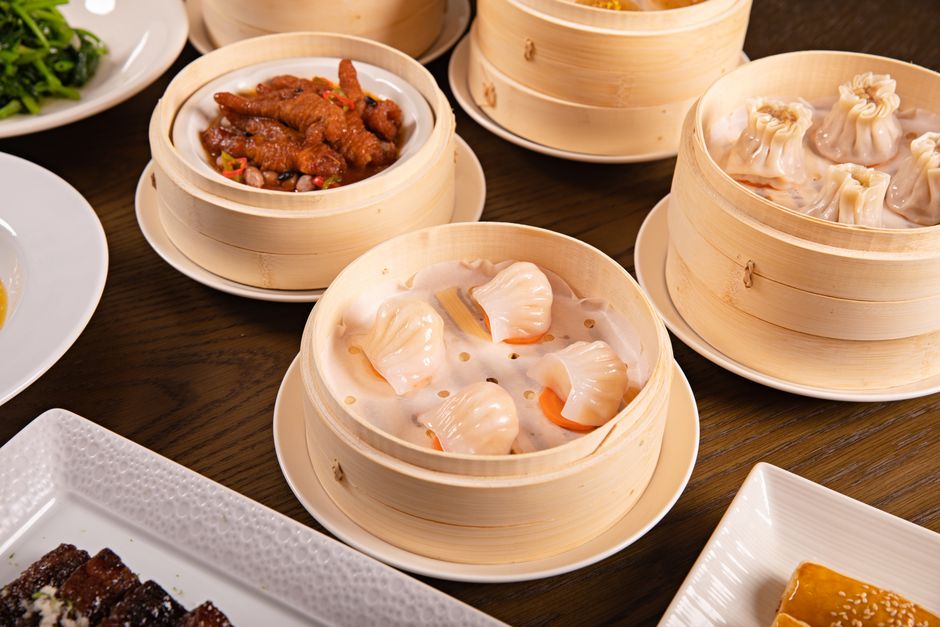
Dim Sum
Dim sum is Guangdong's tradition of small, varied dishes — steamed har gow shrimp dumplings, fluffy char siu bao pork buns, and delicate egg tarts — wheeled around on trolleys in Cantonese teahouses for diners to select at will. The custom of 'yum cha' (drinking tea) alongside dim sum dates back to Silk Road travelers who stopped at teahouses to rest, later evolving in Guangzhou and Hong Kong into the elaborate brunch ritual known worldwide today. A proper dim sum outing can stretch for hours among extended family on weekend mornings.
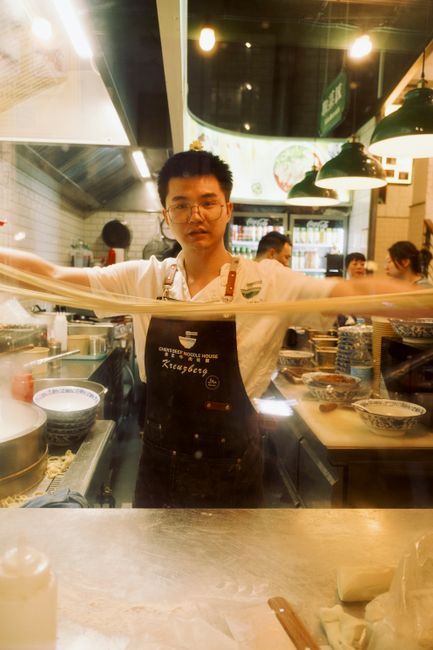
Biang Biang Noodles
Biangbiang noodles are Xi'an's belt-wide hand-pulled noodles, slapped dramatically against the table or counter during preparation to produce a satisfying snapping sound that gives the dish its onomatopoeic name. Tossed with chili oil, garlic, vinegar, and often a scattering of bean sprouts, the thick, chewy noodles are a staple of Shaanxi province's Muslim Hui community cuisine. Street vendors near Xi'an's Muslim Quarter, close to the Terracotta Army site, serve them fresh-pulled to order.
History
Ancient Dynasties and the Birth of Chinese Civilization
Chinese civilization traces a continuous written record back over 3,000 years to the Shang Dynasty (c. 1600–1046 BC), whose oracle bone inscriptions represent the earliest confirmed form of Chinese writing. The Qin Dynasty's first emperor, Qin Shi Huang, unified the warring states in 221 BC and ordered the construction of the famous Terracotta Army — over 8,000 life-sized clay soldiers buried to guard his tomb, undiscovered until 1974.
Imperial Foundations
Qin Shi Huang also began connecting regional defensive walls into what would eventually become the Great Wall, though most of the wall visible today dates from the later Ming Dynasty. The following Han Dynasty (206 BC–220 AD) established the Silk Road trade network and gave the dominant Chinese ethnic group its name.
- The Han Dynasty's Silk Road connected China to Central Asia, Persia, and eventually Rome, carrying silk, paper, and gunpowder westward over centuries.
- Confucianism, formalized during the Han era, became the bureaucratic and ethical backbone of Chinese governance for two millennia.
- China invented paper around 105 AD, gunpowder by the 9th century, and the compass — three of the 'Four Great Inventions' that reshaped world history.
- The imperial examination system, established under the Sui Dynasty around 605 AD, created one of history's first systems of merit-based bureaucratic advancement.
These foundational dynasties established patterns of centralized bureaucracy, written examination, and monumental architecture that would recur through every subsequent Chinese dynasty.
Climate & Best Time to Visit
Spring
10–24°C
Spring (April to May) brings mild, dry weather across most of China, with temperatures of 15–25°C in Beijing, Shanghai, …
Summer
22–35°C
Summer (June to August) brings hot, humid conditions to southern and central China, with Guangzhou and Shanghai regularl…
Autumn
10–24°C
Autumn (September to October) is China's most popular travel season, with dry, mild weather of 15–25°C across most of th…
Winter
-10–8°C
Winter (November to March) is bitterly cold and dry in northern China, with Beijing dropping below 0°C and Harbin plungi…
Fascinating Fun Facts
The Great Wall Isn't a Single Continuous Wall
The Great Wall of China is actually a patchwork of separate walls and fortifications built by different dynasties over m…
China's High-Speed Rail Network Didn't Exist Until 2008
China's first high-speed rail line opened just before the 2008 Beijing Olympics, yet within less than two decades the ne…
The Terracotta Army Was Discovered by Farmers Digging a Well
In 1974, farmers drilling a well near Xi'an accidentally unearthed fragments of what turned out to be one of archaeology…
Giant Pandas Are Found Wild in Only One Country
Wild giant pandas exist naturally only in China's mountainous Sichuan, Shaanxi, and Gansu provinces, with a wild populat…
China Has Only One Time Zone Despite Spanning Five Geographically
Although China's territory stretches across a longitude range that would naturally span five time zones, the entire coun…
Chengdu's Sichuan Cuisine Has Over 6,000 Documented Dishes
Chengdu, recognized by UNESCO as Asia's first City of Gastronomy in 2010, has developed more than 6,000 distinct Sichuan…
Traveler Reviews (0 reviews)
Sign in to leave a review and share your experience.
Sign InNo reviews yet. Be the first to share your experience!